

17 September 2025
By Melissa Stepney
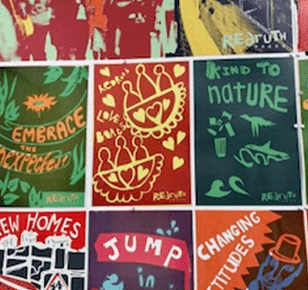
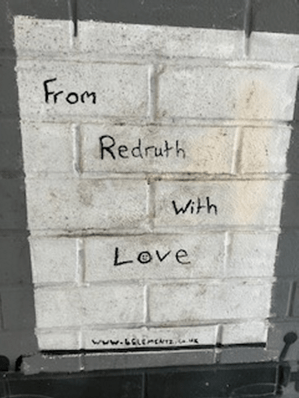
I had the pleasure of working with Ellie as part of our BRC MHID theme INSiGHTS project. Through this, we co-produced art work with young people who attend the charity Young People Cornwall. Here I got to talk with Ellie about her role as youth worker running the ‘Hideaway 77’ youth café in Redruth, Cornwall. I asked her about the importance of youth work and how it can transform and change young peoples’ lives.
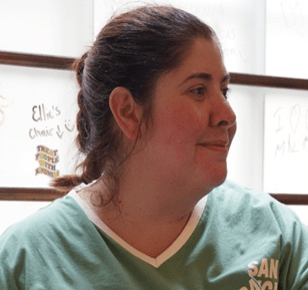
“BEING THAT STABLE FIGURE IN A YOUNG PERSON’S LIFE FOR THEM TO COME TO AND SEEK SUPPORT AND GUIDANCE AND FOR THEM TO KNOW THAT I AM ALWAYS THERE… IS JUST ONE OF THE MOST IMPORTANT THINGS IN MY LIFE”
I first became a volunteer for Young People Cornwall three years ago. I wanted to be a volunteer to give something back to my community and help support young people. I had been quite supported in the past by a lot of services. I had a big desire in me to go out there and help support others and I really, really wanted to go back to youth work – because I’d done it when I was 18 for a few years and absolutely fell in love with being there for young people, supporting them and being a listening ear. Volunteering again for Young People Cornwall just awoke my passion for being that stable figure in a young person’s life for them to come to and seek support and guidance and for them to know that I am always there, and I’m not gonna judge. I’m gonna support them in working their way through things. Being there for young people is just one of the most important things in my life.
The career that Young People Cornwall has given me – it’s much more than that for me. It began as a few hours a week volunteering and now I am with most of the young people I work with most days of the week, and I’m watching them flourish and grow and achieve good things… and come from really dark places but now they’re flying and they’re just doing so well. To know that I’ve been a part of that and I’m a part of their story in that they can look back and be like ‘this person helped me – Ellie was there, she got me the support I needed’ and we worked as a ‘Hideaway family’ as we call it to get us to where we need to be. That’s how and why I absolutely love being a youth worker!
We offer a drop in support hub on a Tuesday which is for any young people aged between 11 and 25 who just needs someone to talk to – we’re here to listen to them whether it’s anxiety, school related stress, relationships, identity or anything else on their mind. We offer that safe space for a young person to come in and have a 1-1 with our youth worker or our well-being practitioner. We do single session interventions where we have a 1-1 with the young person and from the single session intervention, we can decide if the young person would need to be referred onto ourselves (Young People Cornwall) or to other services. We also offer a well-being group where we sit and colour and just talk about our feelings and emotions – so that young people do not feel so alone in those thoughts, when we’re together as a group.
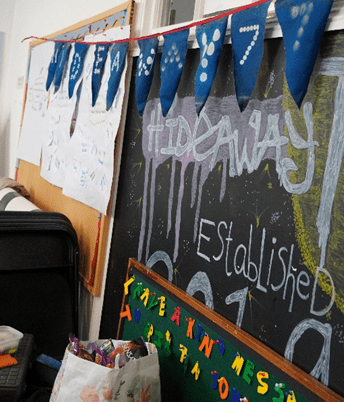
We also offer a ‘supper club’ where young people can come in and learn to cook foods from around the world. It’s all free (no cost) – young people can just come on in and put their culinary skills to the test. It’s a small group, so it’s nice to work as a team and trial the yummy food! Then we have Wednesday youth clubs where we have a younger age drop in and older drop in. These are just sessions where the young people can come in, be themselves, get support, chat with mates, listen to music, play games etc. We’ve got a quiet room where we’ve got sofas, beanbags blankets for the winter, heaters, hot chocolates and we have film nights. Again this is a lovely safe space for young people to just be… and of course the youth workers are at hand if anybody needs any support and extra guidance.
We’ve recently been really successful in a funding bid for a sports project which is where young people will get the opportunity to take part in sports once a week, for those young people who don’t have the financial means to go to kickboxing, or swimming or do other activities. After that it will be followed by a 2 to 1 peer mentor session with a youth worker where the young person can sit with a friend, chat and have something healthy to eat …and just be together as a community and not feel so isolated.
“AS MUCH AS IT’S NATURAL BEAUTY DOWN HERE, IT’S ALSO VERY ISOLATED AND THAT CAN BE A MASSIVE DIFFICULTY FOR YOUNG PEOPLE IN CORNWALL”
I think young people in Cornwall face a range of challenges and difficulties, and it can be linked to the rural and coastal location. For example, there’s quite limited transport links and it can make it quite difficult for young people to access education, training and social opportunities – particularly for those living in remote villages where there’s no modes of transport. Employment in Cornwall is usually seasonal and to be fair, quite low paid due to its reliance on tourism. So, in the summer they can all get summer jobs, but as soon as that season’s over, they will be out of work.
I think housing costs and a shortage of homes can make it really hard as well for young people to try and live independently as they get older. I think a lot of young people also experience that they’ve got quite a reduced access to mental health services and new facilities leading to them feeling quite isolated. So with Young People Cornwall, putting ourselves in as many of those towns (across Cornwall) as we can, we are able to try and break that cycle of young people being isolated and not being able to access the centres. We are really lucky in Redruth because we are near a train station but again I know a lot of young people struggle financially to even come to the centres by public transport, because of the cost of it all. Families here are just really, really struggling in Cornwall with the cost of living.
I think exploitation is also a big thing in Cornwall and it’s really tempting and easy I guess for young people to take offers up of things such as county lines – especially with not having any money and struggling and also seeing their family struggle. I think a lot of young people are really vulnerable to exploitation…these are massive factors for young people. As much as its natural beauty down here, it’s also very isolated and that can be a massive difficulty for young people in Cornwall.
At the Hideaway I aim to a create a warm, safe, happy, calming environment that also makes young people feel like they’re a part of something – a part of a community and a part of the ‘hideaway family’. I like to create a clean, friendly, colourful, happy place that young people love to be. A place where they don’t feel the need to run away, because they feel really happy and safe while they’re here, and supported. I really, really pride myself on the Hideaway and the welcoming environment and the community feel, and that any young person whether that’s a new young person or a young person who has been there from the start, just anyone that comes through the door of the hideaway – that they feel welcomed and they know that it’s a safe space, that’s the main thing. We’ve got our little like system where if things aren’t feeling quite right in the centre, we’ll have a little like jiggle around until everyone feels like it’s OK again. We work together, I like for it to be a place where everyone works together because I think that’s the most important key value of youth work – that nobody’s alone and everyone’s together.
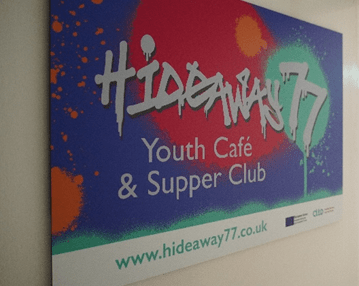
So a typical day of running Hideaway 77 looks a little bit like me arriving at work at the centre, getting all the drinks and all the snacks ready because we know that snacks will be needed, because if you’ve had a long day at school or college or home school, you’re gonna need to come in and get some snacks and a drink. That’s a ‘legal requirement’ after school for any young person!
I will put worksheets out, so for example at the moment we’re doing some ‘iceberg worksheets’ so we’ve got the top of the iceberg where we are talking about what does being at the top of an iceberg look like to us, and then what’s at the bottom of the iceberg –so how we are feeling when we are at our lowest and what are our coping techniques for that.
So I will be getting all of that ready – and the pens, paints and setting up the session ready for the young people that do arrive about an hour early as you’ve learned! So I’m setting up the session and doing the shopping for the centre – it’s a bit like a house as in like I’ll go shopping, and I go home and put all the shopping away and get everything ready for the session.
An unexpected part of my job is that I have turned into a little bit of a launderette! Like we’ll have a young person get paint or pen on their new jumper or their PE top or their school shirt and I have found myself one or two times having to bring those items home so that I can use my vanish – they always say that I’m the magic clothes washer at the Hideaway! [laughing] No stain too big or too small I will bring it home, I will wash it, I will dry it, I will get it back to the centre for them for the next day so that they can wear it home like nothing ever happened! It didn’t mention that in the (job) contract that I would be another Dot Cotton but it turns out I am, and I am absolutely here for it!
I would say that I adapt my approach to working with young people by just taking time to understand their individual needs – their backgrounds and experiences – by creating an inclusive, non-judgmental environment where they are feeling valued and respected. I will use flexible communication styles – whether that would be like active listening, creative activities or practical support so that the young person can feel engaged in a way that works for them. I think by being patient and open minded and culturally aware, I can build trust and that positive relationship with the young people – and that then builds them a path for them to feel supported and for them to go on and achieve their goals. That’s the best approach in working with young people and taking that time to understand their backgrounds, understand their needs and so that they just feel valued and respected by me and I think that’s really important in building that relationship.
So I think that a good youth worker should be reliable, approachable and be able to create that safe, inclusive space where young people feel valued. I think it requires really strong communication and active listening skills to really allow young people to feel heard and understood. I think empathy and patience are absolutely essential for building that trust and supporting the young people through challenges. Adaptability helps us to respond to different situations and needs. The ability to inspire and motivate also play a key role in helping young people reach their potential.
I think you have to be really consistent in showing up for the young people – being committed – so committed, it takes so much commitment! You gotta be understanding, you’ve gotta be patient.
You could be supporting a young person and get a few sentences of what’s going on for them, but you need to be really patient and show up again the next day and be ready with listening ears for the next part of the sentence, when the young person feels comfortable and trusts you enough to open up and engage with you. Because for the young people these are HUGE things, massive deals and you’ve just got to be that person that always shows up for them and doesn’t add pressure to them, and doesn’t give up and say ‘I’m done listening to you now because you’re not really telling me what’s happening’. You have to say ‘OK, thanks for the chat, we’ll try again when you’re ready next time’ you just gotta be always there ready to listen.
I think you’ve got to be quite forgiving at times with young people. If they’re going through a lot, they can lash out, they can shout out, they can make you feel like they are really angry at you but you’ve got to put that all to one side and be like actually this young person isn’t angry with me, they’re angry with this situation they’re in and how they’re feeling. So you gotta help them work that out and support them so that they don’t feel like that anymore. So yeah forgiving is one of the big word for me.
I think researchers that are aiming to build like a meaningful partnership with charities like Young People Cornwall should prioritise genuine collaboration over extractive data gathering. So I think this means involving the charity and the young people so that they can see this from the earliest stages and I think shaping the research questions together with young people and ensuring that findings are accessible and relevant, and respecting the charities expertise in the local need.
I think building trust through clear communication and transparency about goals; and a commitment to long term impact rather than just one off data gathering projects would help create work that is mutually beneficial and sustainable. And that way it would be really truly rooted in the community of the young people and their environment. And it would also really give them a chance to see what the researchers are aiming to gather. So yeah week long workshops as you and I have just done – that was really, really beneficial because it helped the young people understand why you were there, what your role was and it also gives you a chance to build that relationship with young people rather than just coming in with a tick list saying ‘can you do this data/research with me’ because they would literally just tick a box and not know what they’re ticking so I think coming in and offering projects such as yourself has had a massive impact and really helps the young people feel heard and that their voices count.
I think that’s been SO good long term – I know a lot of young people are still talking about the research now – two weeks post research (workshops) and they’re still talking about it and wondering how you’re getting on with collecting your research evidence, and it really became important to them, so I think that’s a really good way for researchers to get young people on board – is making them feel a part of it and not just guinea pigs to tick forms!